
Across centuries and continents, a small, unassuming cup has carried the weight of tradition, conversation, and artistry: turkish coffee. More than just a drink, it is indeed a timeless ritual-a delicate dance of finely ground beans, precise brewing, and cultural symbolism that weaves together history and flavor in every sip. From the bustling streets of Istanbul to quiet village gatherings, Turkish coffee invites us into a shared experience where patience meets passion, and the past is savored alongside the rich, thick brew. This article delves into the enchanting world of Turkish coffee, exploring how its preparation and consumption transcend mere caffeine, becoming a profound expression of heritage and hospitality.
The Timeless Ritual of Turkish Coffee: Brewing Culture and Flavor
The Timeless Ritual of Turkish Coffee: Brewing Culture and Flavor invites you on a journey through centuries-old tradition, steeped in rich aromas and cultural mystique. This deeply evocative beverage is more than just coffee-it’s an experience that binds history, community, and craftsmanship into every sip. From the bustling streets of Istanbul to quiet family gatherings, mastering Turkish coffee is about honoring its ancient origins while unlocking authentic flavor that dances on your palate.
Prep and Cook Time
- Preparation: 5 minutes
- Brewing: 10 minutes
- total Time: 15 minutes
Yield
Serves 2 small cups (approx. 4 oz. each)
Difficulty Level
Intermediate – requires attention and patience to get the perfect foam and balance.
ingredients
- 2 heaping teaspoons finely ground Turkish coffee (powder-like, finer than espresso grind)
- 2 small demitasse cups cold water (about 3.5 fl oz each)
- 1 teaspoon sugar (optional; adjust to taste – no sugar for sade/plain, 1 tsp for az şekerli/lightly sweet)
- 1 small cardamom pod (optional, for subtle spice)
Instructions
- Measure your cold water using the coffee cup you’ll serve in and pour it into the cezve (conventional turkish coffee pot).
- Add the finely ground Turkish coffee and sugar (if desired) directly into the cezve. Do not stir yet.
- Gently stir the mixture just once to combine the coffee and sugar into the water, ensuring no clumps remain.
- Place the cezve over low heat. patience is key-slow, even heating prevents burning and extracts delicate flavors.
- Watch closely as the coffee begins to foam slowly rising. Before it boils over, remove it from the heat.
- Carefully scoop some of the foam into each serving cup, then return the cezve to heat and allow it to foam up once more.
- Pour the rest of the coffee gently into the cups, letting the grounds settle at the bottom.
Tips for Success
- Use a freshly ground fine powder Turkish coffee for the most authentic flavor and the finest crema.
- Keep heat low and slow to develop a thick foam and avoid bitterness.
- Do not stir after the brewing begins; this keeps the foam intact.
- If foam is lacking, try reducing heat or using a different cezve material (copper preferred).
- serve immediately to enjoy the peak aroma, as the flavors shift quickly once brewed.
Serving Suggestions
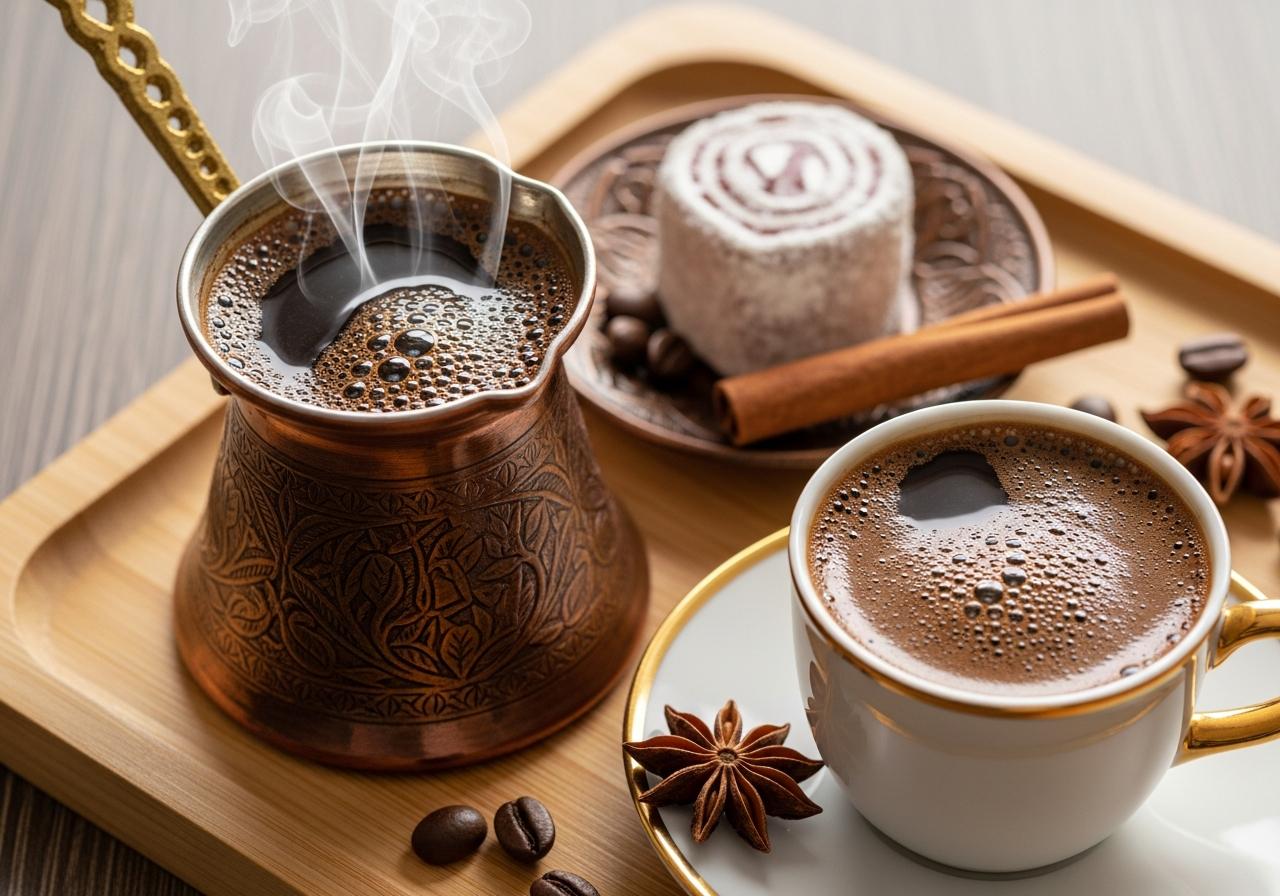
Present in traditional tulip-shaped Turkish coffee cups, accompanied by a small glass of cool water to cleanse the palate before sipping. A piece of Turkish delight (lokum) or a few roasted nuts complements the deep, rich notes splendidly. Dust a pinch of ground cardamom or cinnamon atop the foam for an aromatic flourish. Share alongside lively conversation-this coffee is best savored slowly.

| Nutrient | Per Serving |
|---|---|
| Calories | 15 |
| Protein | 0.3g |
| Carbohydrates | 1g |
| Fat | 0g |
For a deeper dive into the engaging history of coffee and other global brews, explore our History of Coffee Culture article. Additionally, discover how UNESCO recognizes Turkish coffee’s intangible cultural heritage reflecting its importance across generations.
Q&A
Q&A: The Timeless Ritual of Turkish Coffee: Brewing Culture and Flavor
Q1: What makes Turkish coffee different from other types of coffee?
A1: Turkish coffee is not just a beverage-it’s an experience steeped in tradition. Unlike drip or espresso, it’s finely ground to a powder-like consistency and brewed slowly in a special pot called a cezve. the coffee isn’t filtered; instead, the grounds settle at the bottom, creating a rich, thick brew brimming with bold flavor and velvety texture.
Q2: Why is the preparation of Turkish coffee considered a ritual?
A2: The ritual lies in the careful, patient brewing process and the social moments it inspires. Making Turkish coffee involves a delicate balance-adding just the right amount of water, sugar, and coffee, then heating slowly to create the characteristic foam without boiling over. this method demands attentiveness, and the resulting coffee serves as a centerpiece for conversation and connection.
Q3: How does Turkish coffee reflect cultural values?
A3: Turkish coffee symbolizes hospitality, respect, and tradition. Serving it is an art form that conveys warmth and generosity toward guests. It’s common to prepare it during gatherings, celebrations, or even business meetings-signaling friendship and trust. In many communities, sharing turkish coffee is a way to slow down and savor the moment amidst a fast-paced world.
Q4: What role does fortune-telling play in the Turkish coffee tradition?
A4: After the coffee is finished, the cup is turned upside down, letting the grounds dry and form shapes. This practice, called “tasseography,” invites playful interpretation of these patterns to predict the future or reveal insights about the drinker’s life. It’s a whimsical, mystical facet that adds layers of meaning-and a touch of magic-to the coffee ritual.
Q5: Can you describe the ideal Turkish coffee flavor profile?
A5: Authentic Turkish coffee is intensely aromatic and robust, with a balance of bitterness and subtle sweetness (especially if sugar is added during brewing). The unfiltered fine grounds create a thick body and lingering finish, often accompanied by notes of chocolate, spices, or even floral hints depending on the bean origin. Each sip invites you to appreciate depth and complexity in a small cup.
Q6: How has Turkish coffee influenced global coffee culture?
A6: Turkish coffee is one of the oldest brewing styles, predating many modern methods. Its enduring presence has inspired coffee lovers worldwide to explore slow brewing, cultural storytelling, and mindful consumption. The ceremonial aspect challenges the “‘grab and go” coffee culture, reminding us that coffee can be more than caffeine-it can be a bridge between tradition and community.
Q7: What tips would you give to someone trying to make Turkish coffee at home?
A7: Patience is key. Use finely ground coffee and cold, fresh water. Add sugar if you like it sweet, but don’t stir after heating begins. Heat slowly over low flame, watching closely for the foam-just before it boils, remove it to preserve the delicate crema. Serve immediately in small cups and enjoy with a piece of Turkish delight or a glass of water to cleanse the palate. most importantly,brew with intention and share with friends.
this Q&A highlights the richness behind Turkish coffee’s storied tradition - a blend of culture, patience, and flavor that continues to captivate coffee lovers across the world.
Insights and Conclusions
As the final sip lingers, the ritual of Turkish coffee reveals itself as more than just a method of brewing-it is a bridge between history and the present, craftsmanship and community. Each finely ground bean, each carefully measured pour, narrates stories of centuries-old traditions steeped in hospitality and cultural pride. Whether shared among friends or savored in quiet reflection, Turkish coffee invites us to pause, to connect, and to appreciate the rich tapestry woven by flavor and custom. In embracing this timeless ritual, we partake not only in a brew but in a living heritage that continues to awaken the senses and the soul.