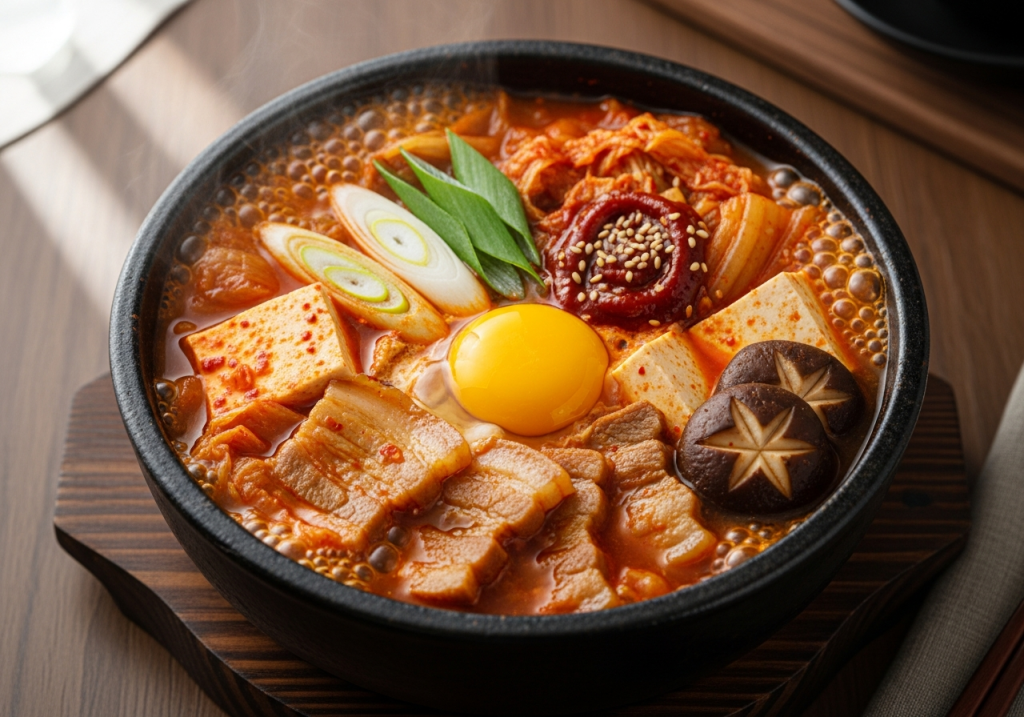

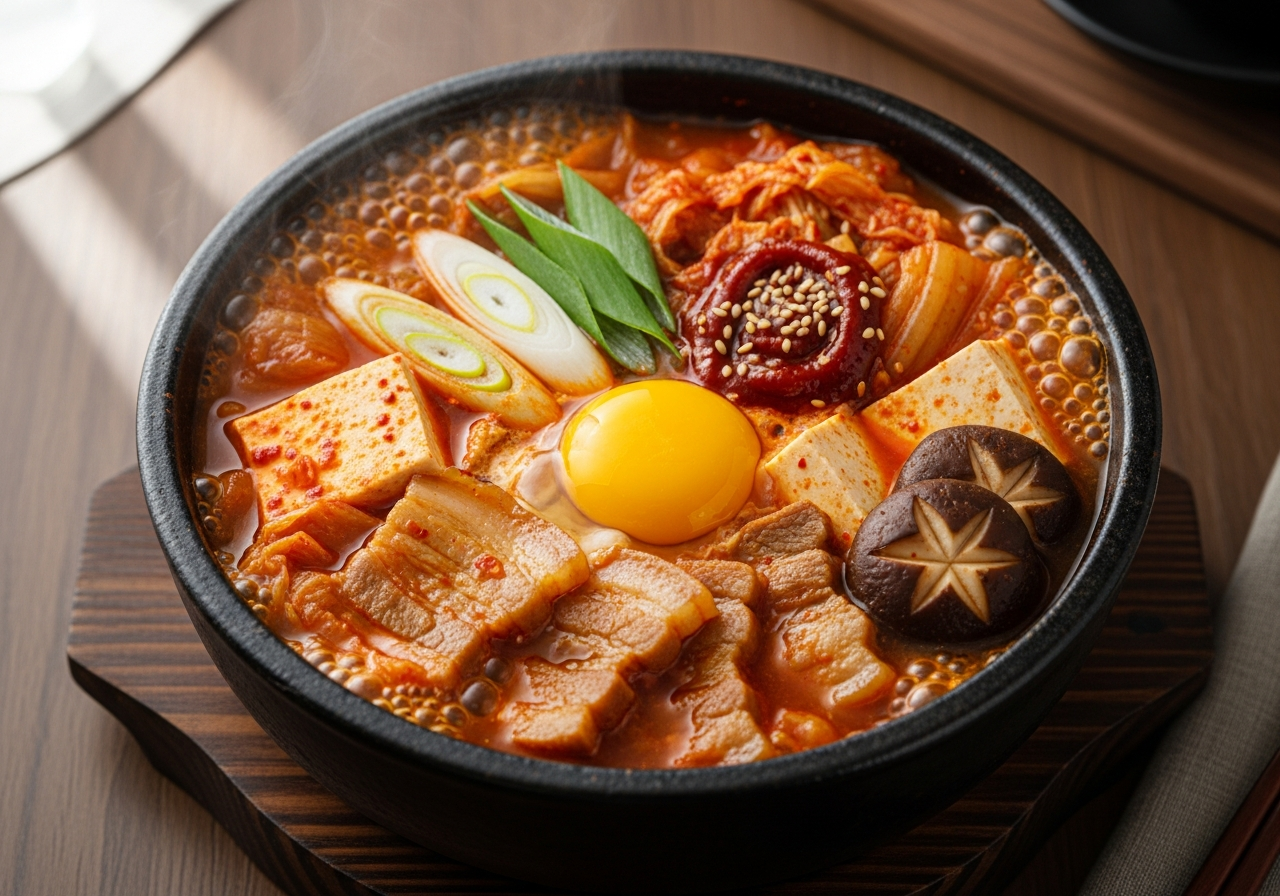
In the heart of Korean cuisine lies a dish that warms both the body and soul-Kimchi Jjigae. This vibrant,bubbling stew bursts with fiery flavors and time-honored tradition,offering more than just a meal; it’s a comforting embrace steeped in history. From humble kitchens to bustling street stalls, Kimchi Jjigae has long been a beloved staple, weaving together spicy kimchi, tender pork, tofu, and a savory broth into a harmonious symphony of taste. Join us as we unveil the story behind Korea’s soulful spicy stew delight, exploring its origins, ingredients, and the cultural significance that continues to make Kimchi Jjigae a cherished symbol of Korean home-cooking.
Kimchi Jjigae, the beloved spicy stew, embodies the essence of Korean home cooking. This hearty dish bursts with bold flavors-simmering tangy fermented kimchi, tender pork, and a rich broth that speaks to centuries of tradition. Inspired by my frist steaming bowl shared with family in Seoul’s bustling markets, Kimchi Jjigae Unveiled transports you to cozy kitchens where warmth and comfort come alive in every spoonful.
Prep and Cook time
Preparation: 15 minutes Cooking: 45 minutes Total: 1 hour
Yield
Serves 4 hearty portions
Difficulty Level
Medium – approachable for most home cooks with basic ingredients and technique
Ingredients
- 2 cups well-fermented kimchi, chopped with juice
- 200g pork shoulder, thinly sliced
- 1 tbsp Korean chili flakes (gochugaru)
- 1 tbsp korean chili paste (gochujang)
- 1 tbsp vegetable oil
- 1 medium onion, sliced
- 3 cloves garlic, minced
- 1 tsp grated ginger
- 4 cups anchovy broth (or substitute with vegetable broth)
- 1 block (200g) tofu, cut into cubes
- 2 scallions, chopped
- 1 tbsp soy sauce
- 1 tsp sugar
- Optional: 1 small zucchini, sliced
instructions
- Prepare the broth: in a pot, bring 4 cups of anchovy broth to a gentle simmer. If unavailable, use a robust vegetable or chicken stock.
- Sauté aromatics and pork: Heat 1 tbsp vegetable oil over medium heat in a heavy-bottomed pot or Korean earthenware (ttukbaegi). Add minced garlic, grated ginger, and sliced onion. Sauté until fragrant and translucent, about 3 minutes.Add pork slices and cook until lightly browned, about 5 minutes.
- Add kimchi and seasonings: Stir in 2 cups chopped kimchi with its juice, 1 tbsp gochugaru, and 1 tbsp gochujang. Cook together for 5 minutes, allowing flavors to meld and kimchi to soften slightly.
- Simmer with broth: Pour in the simmering anchovy broth. Add 1 tbsp soy sauce and 1 tsp sugar to balance acidity and deepen umami. Bring the stew to a boil, then reduce heat and simmer uncovered for 25 minutes to develop a rich, layered broth.
- Add tofu and optional vegetables: Gently add cubed tofu and zucchini slices (if using). Simmer for an additional 10 minutes, careful to maintain gentle bubbles to preserve tofu’s texture.
- Finish and garnish: Taste and adjust seasoning if needed. Scatter chopped scallions on top just before serving for a fresh, peppery note.
Chef’s Notes
- Kimchi maturity matters: use well-fermented kimchi for a deeper, tangier broth. Younger kimchi yields a milder stew.
- Pork swaps: Substitute pork shoulder with pork belly for a richer stew or omit for a vegan version by using shiitake mushrooms and seaweed broth.
- Broth base: Anchovy broth is traditional, but vegetable or kombu dashi can add unique umami for pescatarians or vegetarians.
- Make ahead: Kimchi jjigae improves after resting overnight; flavors intensify beautifully.Reheat gently over low heat.
- Spice balance: Adjust gochugaru quantity to your preferred heat level. Adding sugar and soy sauce helps counterbalance sourness and round out flavors.
Serving Suggestions
Serve steaming hot with a bowl of fluffy steamed rice to soak up the broth’s deep flavors. Accompany with classic banchan like crispy pajeon (scallion pancakes) or seasoned bean sprouts.Garnish with extra scallions and a drizzle of toasted sesame oil for aroma. for authenticity and warmth, enjoy this stew communally, sharing from one pot-a true Korean tradition.

| Nutrient | Per Serving |
|---|---|
| Calories | 320 kcal |
| Protein | 25g |
| Carbohydrates | 15g |
| Fat | 18g |
Discover more Korean soul food with our Bibimbap recipe and deepen your knowledge of fermented foods with insights from Seafood Nutrition Partnership.
Q&A
Q&A: Kimchi Jjigae Unveiled – Korea’s Soulful Spicy Stew delight
Q1: What exactly is Kimchi Jjigae?
A1: Kimchi Jjigae is a hearty Korean stew that centers around kimchi-the country’s famously fermented cabbage-simmered to perfection with tofu, pork, scallions, and a symphony of spices. It’s a beloved comfort food that offers a tangy,spicy,and deeply savory experience,warming both the stomach and soul.
Q2: How did Kimchi Jjigae become such an iconic dish in Korean cuisine?
A2: Born out of resourcefulness,Kimchi Jjigae historically made use of aging or “overripe” kimchi that was too sour to eat on its own.By stewing it with simple ingredients, Korean households transformed leftovers into a vibrant, flavorful meal. Over time, it evolved from humble roots to a cherished staple, symbolizing home-cooked warmth and communal sharing.
Q3: What gives Kimchi Jjigae its signature spicy kick?
A3: The magic lies in its fiery backbone: gochugaru (Korean red chili flakes) and gochujang (fermented chili paste) infuse the broth with layers of heat and umami. Combined with the naturally pungent, fermented kimchi and dashes of garlic and ginger, the stew achieves its trademark boldness that tingles the palate.
Q4: Are there variations to this stew or is it always the same?
A4: Like many traditional dishes, Kimchi Jjigae boasts a delightful spectrum of variations. pork belly is the classic protein choice, but some prefer tuna, seafood, or even vegetarian versions with mushrooms and extra tofu.The level of spiciness and additional ingredients adapt to regional tastes and family recipes-making each pot uniquely personal.
Q5: What’s the best way to enjoy Kimchi Jjigae?
A5: Traditionally,Kimchi Jjigae is served bubbling hot,straight from the stove,accompanied by steamed white rice and an array of banchan (side dishes). The rice balances the stew’s intense flavors, while the communal sharing ritual embodies Korean dining culture-each spoonful a cozy embrace of warmth and togetherness.
Q6: Can Kimchi Jjigae be made at home easily?
A6: Absolutely! With just a few hearty ingredients, homemade Kimchi Jjigae is surprisingly simple yet infinitely satisfying. The key is having good-quality kimchi and allowing the stew to slow-simmer so the flavors meld. It’s a perfect dish for beginner cooks eager to explore Korean flavors or for seasoned chefs craving soulful comfort food.
Q7: Why does Kimchi Jjigae resonate so strongly with Koreans?
A7: Beyond taste, Kimchi Jjigae carries the spirit of Korean history, family, and endurance. It’s a dish born from necessity but full of love, a reminder of shared meals and cultural identity. Each spicy,tangy spoonful is a connection to tradition,a celebration of resilience,and a true taste of Korea’s heart.
Dive into a steaming bowl of Kimchi Jjigae and you’re not just tasting a stew-you’re savoring centuries of culture, flavor, and warmth simmered into one unforgettable delight.
Insights and conclusions
As the simmering pot of kimchi jjigae gently bubbles, it carries with it more than just a hearty blend of fiery spices and tender ingredients-it tells a story steeped in tradition, resilience, and warmth. This soulful stew, with its vibrant layers of flavor, invites us not only to taste Korea’s rich culinary heritage but also to experience the comfort and community woven into every spoonful. Whether you’re a seasoned foodie or a curious newcomer, embracing kimchi jjigae is more than a meal-it’s a delicious journey into the heart of Korean culture, simmered to perfection. So next time you crave a dish that warms the soul and ignites the senses, remember the humble pot of kimchi jjigae waiting to be unveiled.