
In the heart of Provençal kitchens and bustling French bistros alike, ratatouille emerges not merely as a dish but as a vibrant party of tradition, culture, and the bounty of the Mediterranean. “Ratatouille unveiled: A Flavorful Journey Through Tradition” invites you to peel back the layers of this iconic vegetable medley, exploring its humble origins, diverse regional interpretations, and the timeless techniques that transform simple ingredients into a symphony of flavors. Join us as we embark on a sensory voyage, uncovering the stories, secrets, and savor that make ratatouille a beloved emblem of culinary heritage.
Ratatouille Unveiled: A Flavorful Journey Through Tradition
Ratatouille unveiled brings to life a vibrant celebration of Mediterranean sunshine and rustic charm captured in each bite. This quintessential Provençal dish embodies a centuries-old tradition of simplicity, freshness, and harmony between humble vegetables and fragrant herbs.From its rural French origins to contemporary plates worldwide, ratatouille continues to evolve-offering endless inspiration for home cooks and culinary creatives alike.
Prep and Cook Time
- Readiness: 25 minutes
- Cooking: 45 minutes
- Total: 1 hour 10 minutes
Yield
- Serves 6 generously
Difficulty Level
- Medium – Perfect for home chefs looking to master layering flavors
Ingredients
- 2 medium eggplants, sliced into 1/4-inch rounds
- 3 zucchinis, sliced into 1/4-inch rounds
- 4 ripe tomatoes, thinly sliced
- 1 large yellow onion, finely chopped
- 3 garlic cloves, minced
- 1 red bell pepper, diced
- 1 green bell pepper, diced
- 1/4 cup extra virgin olive oil, divided
- 1 teaspoon dried Herbes de Provence
- Fresh thyme, 4 sprigs
- Salt and freshly ground black pepper, to taste
- Fresh basil leaves for garnish
Step-by-step Instructions
- prepare the vegetables: Wash and slice the eggplants, zucchinis, and tomatoes uniformly to ensure even cooking and a visually appealing display.
- Sauté the base: In a large skillet, warm half the olive oil over medium heat. Add the chopped onions and garlic; sauté until soft and fragrant, about 5 minutes.Stir in diced bell peppers, cooking for an additional 7 minutes until tender. Season with salt, pepper, and Herbes de Provence. Remove from heat and spread evenly in the bottom of a baking dish.
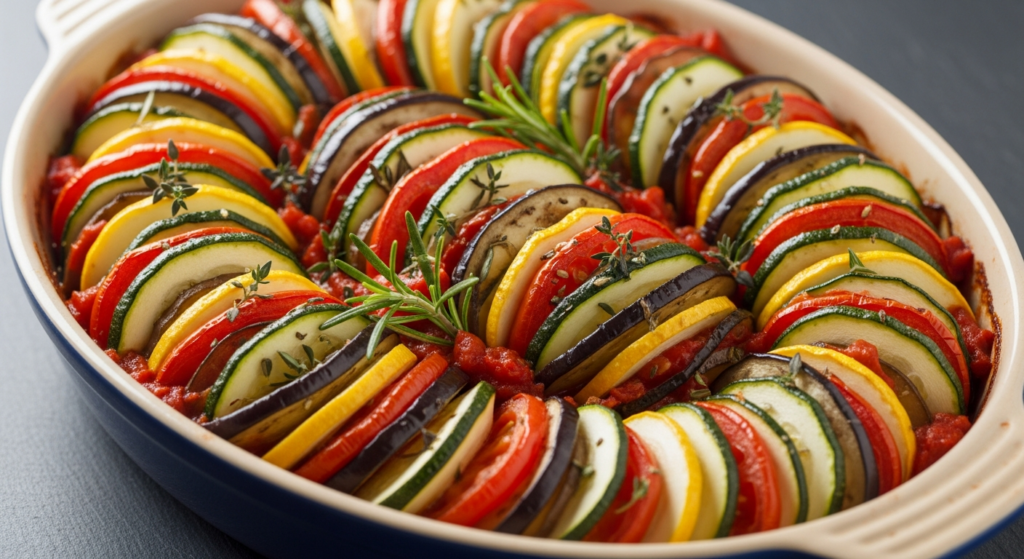
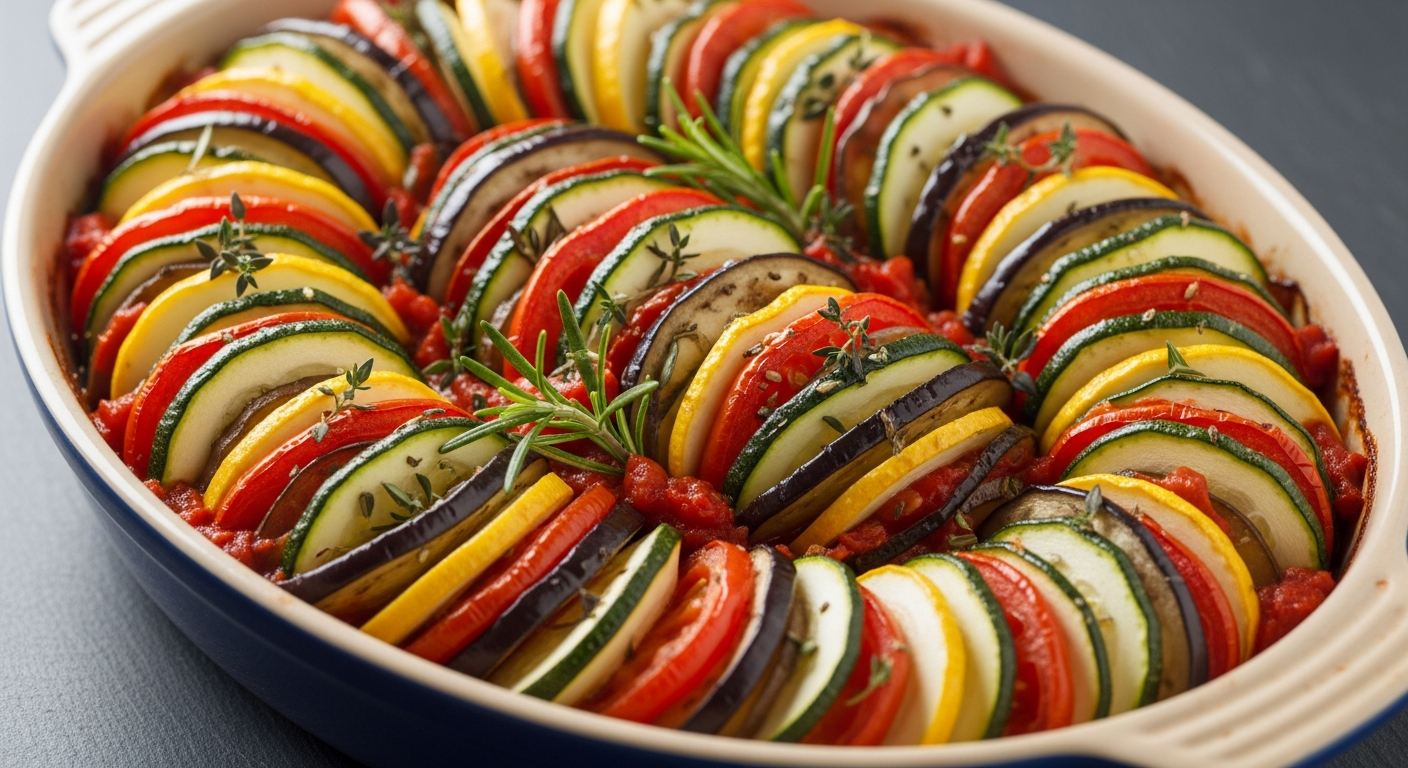
- Layer the vegetable medley: Arrange alternating slices of eggplant, zucchini, and tomato in a spiral or straight rows over the sautéed pepper and onion base. Drizzle the remaining olive oil evenly across the top, sprinkle fresh thyme leaves, and season lightly with salt and pepper.
- Bake gently: Cover the dish tightly with parchment paper or foil and bake in a preheated oven at 375°F (190°C) for about 40 minutes, until vegetables are tender but still hold their shape. Remove the cover during the last 10 minutes to allow slight caramelization on top.
- Rest and garnish: Let the ratatouille rest for 10 minutes out of the oven to meld the flavors. Garnish with fresh basil leaves before serving for a luminous pop of color and herbaceous aroma.
Chef’s Notes and Tips for Success
- Seasonal variations: Swap out eggplants for summer squash or add a splash of balsamic vinegar to intensify the depth of flavor during colder months.
- Uniform slicing: Use a mandoline slicer for even thickness-this ensures all vegetables cook evenly and present beautifully on the plate.
- Make ahead: Ratatouille tastes even better the next day as flavors mature. Prepare the dish fully and refrigerate; gently reheat before serving.
- Going vegan or gluten-free: This recipe is naturally free of gluten and dairy-feel confident serving to guests with dietary restrictions.
- Reducing bitterness: For less bitter eggplants, sprinkle slices with salt, let sit 15 minutes, then rinse and pat dry before cooking.
Serving Suggestions
Ratatouille unveiled is a stunning centerpiece paired beautifully with crusty artisan bread or creamy polenta to soak up its juices. Consider serving it alongside a delicate roasted chicken or a flaky white fish for a balanced meal. Garnish with additional fresh herbs and a drizzle of high-quality olive oil to emphasize its rustic Mediterranean soul.
Pairing Ratatouille with Wine and Side Dishes
Choose light, aromatic reds like a Côtes du Rhône or a chilled rosé to complement the ratatouille’s herbal and earthy notes without overpowering its delicate balance. For a white wine, a crisp Sauvignon Blanc or a lightly oaked Chardonnay will enhance the dish’s freshness.
On the side,a simple green salad dressed with lemon vinaigrette or garlic mashed potatoes creates contrast and elevates the overall dining experience.
| Nutrient | Per Serving |
|---|---|
| Calories | 150 kcal |
| Protein | 3 g |
| Carbohydrates | 18 g |
| Fat | 8 g |

For further inspiration on Mediterranean vegetables, explore our Mediterranean Roasted Vegetables recipe. To deepen your understanding of Provençal cuisine,visit Britannica’s Ratatouille Entry.
Q&A
Q&A: Ratatouille Unveiled – A Flavorful Journey Through Tradition
Q1: What is ratatouille, and why is it considered a quintessential French dish?
A: Ratatouille is a vibrant medley of summer vegetables-typically eggplant, zucchini, bell peppers, tomatoes, onions, and garlic-slowly simmered in olive oil with fragrant herbs. Originating from Provence, this rustic yet elegant stew embodies the essence of French countryside cooking. It celebrates simplicity, seasonality, and the harmonious interplay of fresh produce, making it a beloved staple in classic French cuisine.
Q2: How did ratatouille evolve from humble peasant food to a celebrated culinary icon?
A: Initially, ratatouille was a practical farmers’ dish crafted to make the most of abundant garden vegetables during the summer harvest. Over time, chefs elevated its preparation-focusing on perfecting texture, layering flavors with fresh herbs like thyme and rosemary, and sometimes presenting it artistically, as showcased in the beautifully arranged “confit byaldi” style popularized by the film Ratatouille. Its transformation reflects a broader gastronomic appreciation for simple ingredients treated with care.
Q3: What role do herbs and spices play in achieving the authentic ratatouille flavor?
A: Herbs like thyme, basil, rosemary, and bay leaves infuse ratatouille with aromatic depth, bridging the natural sweetness and earthiness of the vegetables. Garlic and black pepper add warmth and a subtle bite, while olive oil binds the ingredients together, enhancing texture and mouthfeel. The careful balance of these elements is what turns a straightforward vegetable stew into a fragrant, soulful dish that evokes the Provençal landscape.
Q4: Can ratatouille be enjoyed beyond a customary stew? What are some creative ways to serve it?
A: Absolutely! Ratatouille’s versatility allows it to shine in myriad forms-from a hearty side dish accompanying roasted meats to a vibrant topping for crusty bread or a filling for savory crepes.It can also serve as a sauce for pasta or polenta, or even be chilled as a refreshing salad. Each presentation spotlights the dish’s vibrant flavors and colors, inviting experimentation while honoring its roots.
Q5: What tips can home cooks follow to make their ratatouille truly authentic and flavorful?
A: Start with the freshest, ripe vegetables-seasonality is key. Slice them uniformly for even cooking and consider layering or sautéing individually to preserve their distinct textures.Use good-quality olive oil and fresh herbs to elevate the flavor. Patience is essential; slow simmering allows flavors to meld beautifully. Lastly, don’t be afraid to adapt-regional variations abound, so let your palate guide you on this tasty journey.
Q6: How does ratatouille reflect the cultural and environmental identity of Provence?
A: Ratatouille mirrors Provence’s sun-drenched fields, olive groves, and aromatic herb gardens. It encapsulates the Mediterranean climate’s bounty and the Provençal beliefs of mindful eating-valuing local, fresh ingredients and celebrating the seasons. Through every simmered bite, ratatouille tells a story of tradition, community, and an enduring love for simple, soulful food.
This Q&A invites readers to savor ratatouille not just as a dish, but as a cultural experience-one that continues to inspire chefs and food lovers around the world.
the Conclusion
As we close the lid on our flavorful exploration of ratatouille, we find that this humble dish is far more than a simple medley of vegetables-it is a vibrant tapestry woven from centuries of tradition, culture, and culinary artistry. Each sizzling pan and simmering pot carries whispers of Provençal sunlit fields, rustic kitchens, and generations who treasured the bounty of their land. Whether served as a rustic side or a centerpiece bursting with color and aroma, ratatouille invites us to savor not just a recipe, but a story-one that celebrates the timeless harmony between nature’s harvest and human creativity. So next time you stir this classic stew,remember: you’re partaking in a flavorful journey that continues to unite hearts and palates around the world. Bon appétit!